Symbol of Daydreaming: Begonia Flower
General Information About Begonia
The begonia flower is named after the botanist Michel Bégon. It is a popular ornamental plant that is cultivated in many parts of the world. Begonias are suitable for indoor growing and are commonly preferred as houseplants.
Climate and Sunlight Requirements
Begonia plants do not prefer direct sunlight. They grow best in semi-shaded or shaded areas where sunlight reaches them indirectly. These plants thrive in temperate climates and are sensitive to extreme heat or excessive cold. They should also be protected from strong air currents.
Watering and Humidity Needs
During the summer months, begonias should be watered thoroughly so that water reaches all parts of the pot. In winter, watering should be reduced. One of the most important points is to water the plant regularly and in consistent amounts.
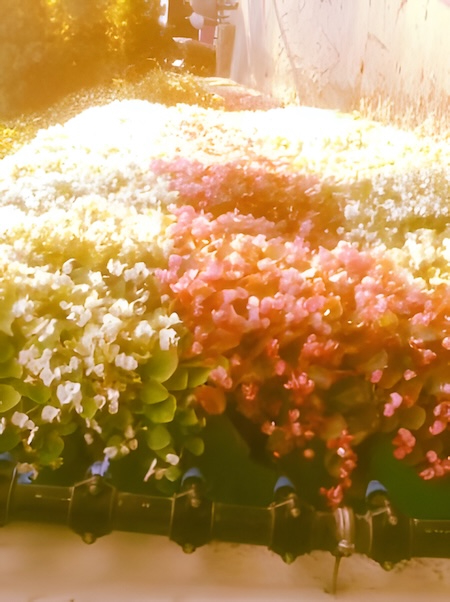
Begonias need more water during their blooming period, so extra care should be taken to keep the soil slightly moist. If the plant is grown in a very dry environment, lightly spraying water on the leaves can be beneficial. Begonias generally prefer humid conditions. Blooming Period Begonia flowers usually bloom during the summer season. One of their most attractive features is that they are able to maintain their colors for a long time.
Pruning and Maintenance
Removing dried leaves and regular pruning help the begonia plant grow healthier and look more attractive. Proper care supports longer blooming and stronger growth.
Reproduction Methods
Begonias can be reproduced in several ways, including tubers, seeds, and cuttings. Root division is usually done in April, while seed planting can be carried out in December.
Origin and Distribution
The homeland of the begonia plant is India. However, today begonias can be grown successfully in many regions, including Asia and America .
Types of Begonia
There are approximately 900 different begonia species worldwide. Some of the most common types include:
Tuberous Begonia
These begonias have large flowers and can be found in colors such as yellow, red, and pink.
Hanging Begonia
This type has a trailing structure and is often used in hanging baskets.
Flowering Begonia
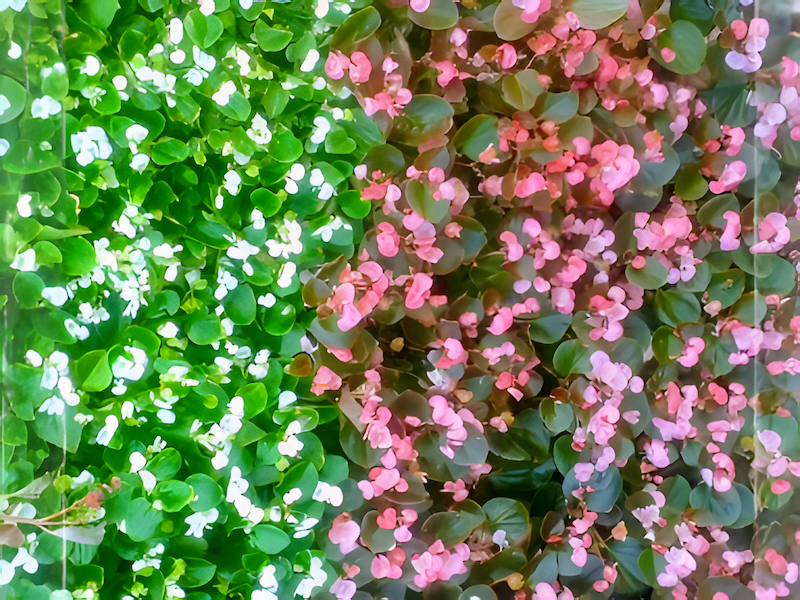
Flowering begonias bloom continuously and remain green throughout the year. They are commonly used as outdoor ornamental plants. Their flowers are usually pink, white, or red, and they are generally smaller than other types.
Leaf Begonia
Leaf begonias are known for their decorative leaves with unique and eye-catching patterns.
Common Diseases and Soil Conditions
Leaf spot and root rot are common diseases seen in begonia plants. Overwatering is usually the main cause of root rot. Additionally, if the soil has high acidity , the plant may have difficulty absorbing air, which can cause the leaves to fade.
If you enjoyed this article, you may also like our other outdoor and garden-related posts.
