The Sun ☀️
The Sun is a star that formed about 4.6 billion years ago and it is the main source of life on Earth. Without the Sun, life on our planet would not be possible. It provides heat, light, and energy, making many natural processes possible.
Importance of the Sun for Life on Earth
The Sun plays a crucial role in photosynthesis, which allows plants to produce food and oxygen. This process forms the basis of life on Earth. In addition, sunlight helps the human body produce vitamin D, which is essential for healthy bones and immune function.
If the Sun did not exist, Earth would be dark, cold, and lifeless.
Energy and Light of the Sun
The Sun produces energy in its core through nuclear reactions. About half of its energy is released as infrared radiation, most of the rest is visible light, and a small portion is ultraviolet radiation. These energy forms reach Earth and support life and climate.
Sunlight reaches Earth in approximately 8 minutes, even though the distance between Earth and the Sun is about 149 million kilometers.
Structure and Composition of the Sun
The Sun is a massive, extremely hot ball of gas and plasma. It is about 960,000 times larger than Earth and does not have a solid surface.
Its main elements are hydrogen (H) and helium (He). In smaller amounts, it also contains elements such as carbon, oxygen, nitrogen, magnesium, sulfur, and iron. Although trace amounts of heavier elements like gold exist, they are very rare.
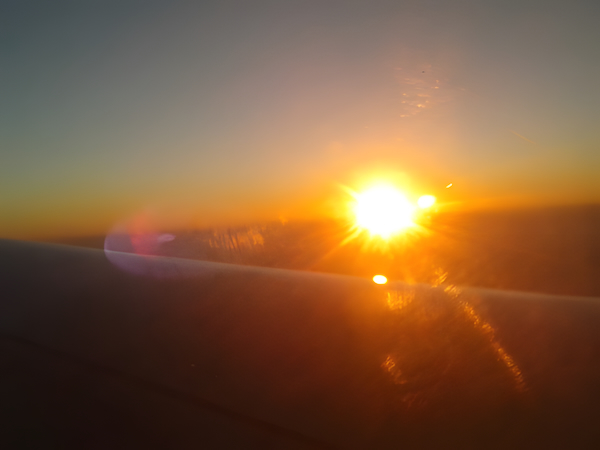
The visible surface of the Sun is called the photosphere. Above it lies the chromosphere, and the outermost layer is the corona, also known as the Sun’s crown.
Motion of the Sun
The Sun rotates around its own axis and completes one rotation in about 24 days and 6 hours. At the same time, it travels through space while orbiting the center of the Milky Way galaxy at a speed of around 220 kilometers per second. One full orbit around the galaxy takes approximately 250 million years.
The Earth and the other planets move together with the Sun in this journey.
The Sun and the Solar System
The Sun is located at the center of the Solar System and contains most of its total mass. Planets, asteroids, comets, meteorites, and cosmic dust make up only a small fraction compared to the Sun.
Mercury is the closest planet to the Sun, while Neptune is the farthest planet.
The gravitational force of the Sun is about 28 times stronger than Earth’s, which keeps all planets in their orbits.
Temperature and Appearance
The surface temperature of the Sun is approximately 5,600°C. Although the Sun emits all colors of light, it may appear different in color when viewed from Earth due to atmospheric effects, especially during sunrise and sunset.
Ultraviolet rays emitted by the Sun are a form of radiation and can be both beneficial and harmful depending on exposure.
Historical Understanding of the Sun
As early as 450 BC, the philosopher Anaxagoras suggested that the Sun was a star. Later, scientists such as Galileo Galilei, Johannes Fabricius, and Christoph Scheiner made important observations, including the discovery of sunspots.
Time and the Sun
The movement of the Earth around the Sun defines one year. Calendars based on this motion are known as solar calendars, and they are widely used in many countries today.
